How Shipping and Handling Fees Affect Cost per Mg
Flat shipping and handling fees change the real cost per mg of a research peptide order more sharply on small vials than on bulk, multi-vial purchases.
Reviewed by Lisa Nakamura, RPh, PhD, pharmacologist ·
Lisa Nakamura, RPh, PhD holds dual credentials as a registered pharmacist and doctoral pharmacologist, with academic research in peptide drug development, bioavailability, and pharmaceutical formulation science at Fred Hutchinson Cancer Center.
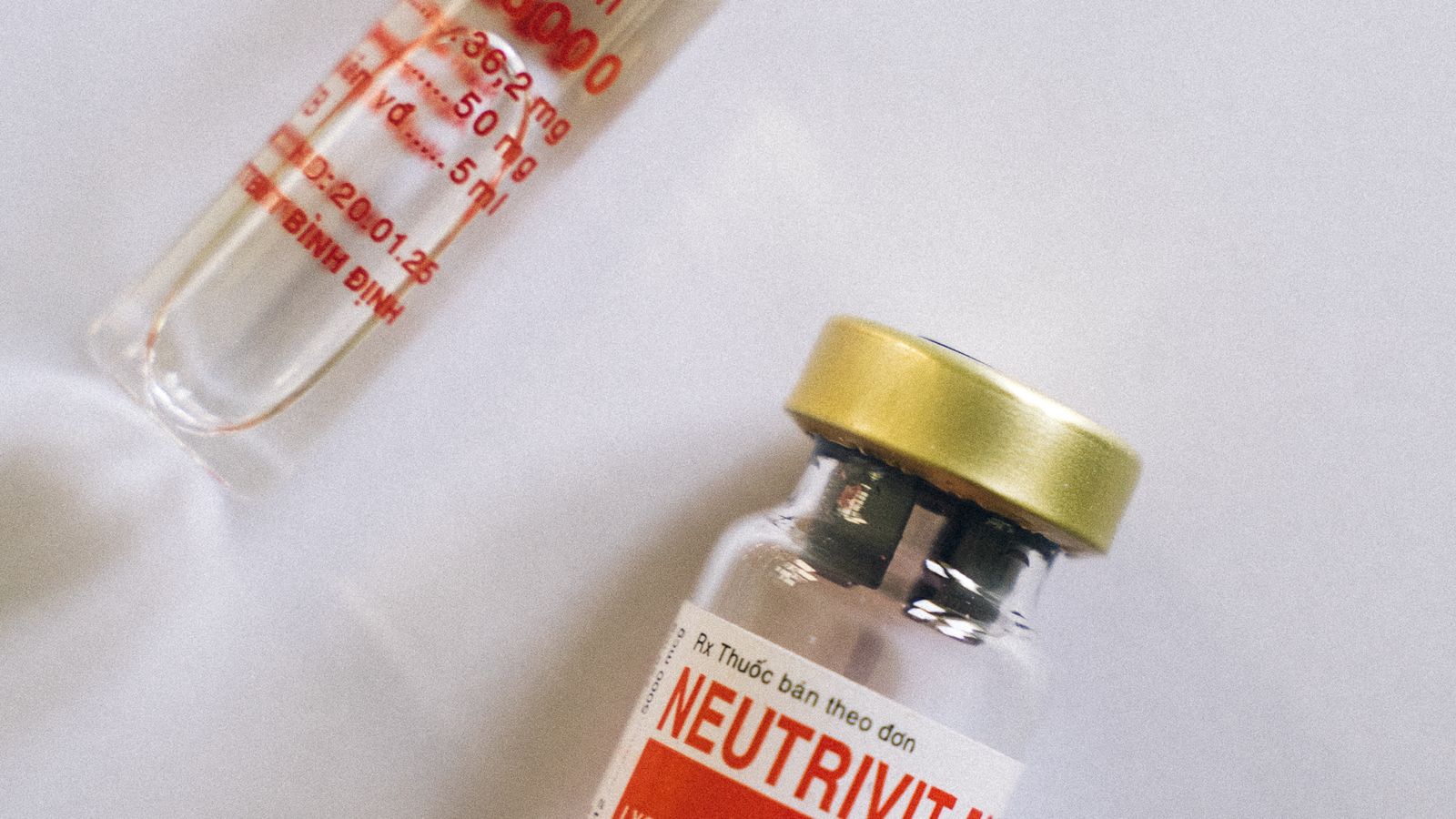
Shipping and handling fees affect the real cost per mg of a research peptide order by adding a cost that sits outside the listed vial price, and how much that fee moves the per-mg figure depends almost entirely on how many total mg the fee gets divided across. A flat fee added to a single small vial raises the effective cost per mg by a wide margin, while the same flat fee added to a larger multi-vial order barely moves the number at all. The listed cost per mg on a product page is calculated before shipping is added, so it is never the figure that describes what was actually paid per mg once an order is placed.
Why the Advertised Cost per Mg Excludes Fees
Most listings calculate cost per mg from the vial price alone, dividing the price shown on the page by the mg stated on the label. That figure is useful for comparing listings side by side, but it describes the compound only, not the completed transaction. Shipping charges, handling fees, and any packaging or cold-pack surcharges are added at checkout, after the comparison a buyer likely already made. The result is a gap between the number used to compare vendors and the number that reflects what an order actually cost per mg.
This gap is not a flaw in how listings present prices — vial price and delivery cost are genuinely separate line items. But treating the advertised cost per mg as the final figure skips a step that can matter more than it first appears, particularly on smaller orders.
Extending the Formula to Include Fees
The base formula for cost per mg is vial price divided by mg per vial. Adding shipping and handling extends it by one term:
real cost per mg = (vial price + shipping/handling fee) ÷ mg per vialFor an order with multiple vials, the fee is typically charged once per order rather than once per vial, so it gets divided across the combined mg of every vial in that order:
real cost per mg (multi-vial order) = (total vial price + shipping/handling fee) ÷ total mg orderedThe key variable is total mg, not vial count or price. A flat fee spread across a small mg total produces a larger per-mg increase than the same fee spread across a large mg total.
Worked Example: Small Order vs. Bulk Order
Take a single 5 mg vial priced at $80, with a flat shipping and handling fee of $25 for the order.
Vial price only:  $80 ÷ 5 mg = $16.00 per mg
With fee:         ($80 + $25) ÷ 5 mg = $105 ÷ 5 mg = $21.00 per mg
The fee alone adds $5.00 per mg, which is $25 ÷ 5 mg. Relative to the $16.00 base rate, that is roughly a 31 percent increase once shipping is folded in.
Now take a bulk order of three 10 mg vials at $140 each, totaling $420 and 30 mg, with the same flat $25 fee applied once to the whole order.
Vial price only:  $420 ÷ 30 mg = $14.00 per mg
With fee:         ($420 + $25) ÷ 30 mg = $445 ÷ 30 mg = $14.83 per mg
Here the fee adds only about $0.83 per mg, or roughly 6 percent above the $14.00 base rate. The fee itself did not change, but the mg total it was divided across grew six-fold, shrinking its per-mg impact by close to the same factor.
| Order | Vial price | Fee | Total mg | Cost per mg before fee | Cost per mg after fee |
|---|---|---|---|---|---|
| Single 5 mg vial | $80 | $25 | 5 mg | $16.00 | $21.00 |
| Three 10 mg vials | $420 | $25 | 30 mg | $14.00 | $14.83 |
The table makes the pattern clear: the same flat fee produces a very different percentage effect depending on how much mg the order contains. A listing that looks cheaper per mg before checkout can end up close to, or more expensive than, a bulk listing once the flat fee is added, especially when the comparison is a small trial-size vial against a larger multi-vial order.
Flat Fees vs. Percentage-Based Handling Charges
Not every vendor structures delivery costs the same way. A flat fee, as used above, has a shrinking effect on cost per mg as order size grows. A percentage-based handling charge behaves differently, because it is calculated as a share of the subtotal rather than a fixed dollar amount.
Applying an 8 percent handling charge to the $420, 30 mg bulk order gives a fee of $33.60, for a total of $453.60:
$453.60 ÷ 30 mg = $15.12 per mgThat is an 8 percent increase over the $14.00 base rate — the same percentage regardless of how many vials are in the order, because a percentage-based fee scales with the subtotal rather than staying fixed. Knowing which structure a vendor uses matters when comparing an order across different sizes: a flat-fee vendor rewards consolidating into fewer, larger orders, while a percentage-fee vendor applies roughly the same proportional cost no matter how the order is split.
What to Check Before Comparing Cost per Mg Across Vendors
A few checkout-stage details determine whether the advertised cost per mg holds up once shipping and handling are included:
- Whether the fee is flat per order or scales with cart size or weight
- Whether cold-pack or insulated packaging is billed separately from standard handling
- Whether the fee is disclosed before checkout or only appears at the final step
- Whether combining multiple compounds into one order shares a single shipping charge across all of them
None of these details change the underlying formula, but they determine which numbers to plug into it. A vendor that only reveals its shipping and handling fee at the final checkout screen makes it harder to run this math in advance, which is itself worth noting when judging how transparent a listing is. Readers comparing documentation practices across listings, not just price, may find it useful to cross-reference how vial sizing and labeling are described on a site like peptidehelp.us alongside the fee structure at checkout.
Vendors also differ in how consistently they document the compound behind the price. A product page that states vial size and batch documentation as clearly as the BPC-157 listing at HEEZ Research makes it straightforward to run the fee-adjusted formula with confidence in the mg figure being divided into; a listing with a vague or unstated mg amount makes any per-mg calculation, fee-adjusted or not, unreliable regardless of how the shipping charge is structured.
Summary
Shipping and handling fees affect the real cost per mg of a research peptide order by adding a cost that must be divided across total mg, and the size of that effect depends on order size: flat fees hit small orders hardest and shrink in relative impact as mg totals grow, while percentage-based fees apply a roughly constant proportional increase regardless of order size. Running the extended formula — vial price plus fee, divided by total mg — before comparing listings gives a more accurate picture of what an order actually costs per mg than the pre-checkout price alone.
A note on how to read this
This article is written for research and educational reference. The materials described are sold for laboratory research and are not for human consumption. Nothing here is dosing guidance, a prescription, or a clinical recommendation.